
Industries · Fitness & Activewear
Email marketing for fitness and activewear brands
A runner buys compression socks two weeks before a marathon. A lifter buys a belt in January. A cyclist only thinks about you from April to September.
Fitness customers buy around their training, and their training follows a calendar you can see in your data. We build Klaviyo email and SMS programs for fitness gear, activewear and recovery brands that follow that calendar.
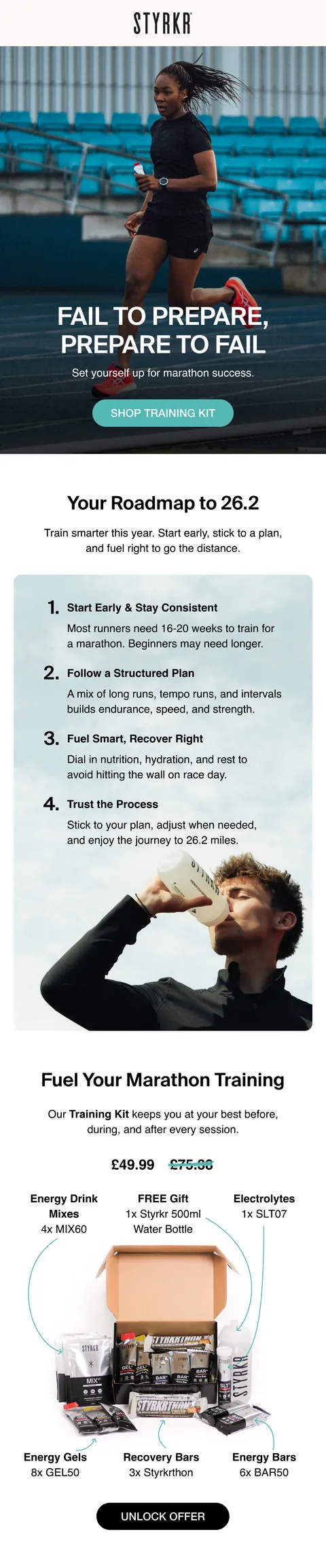
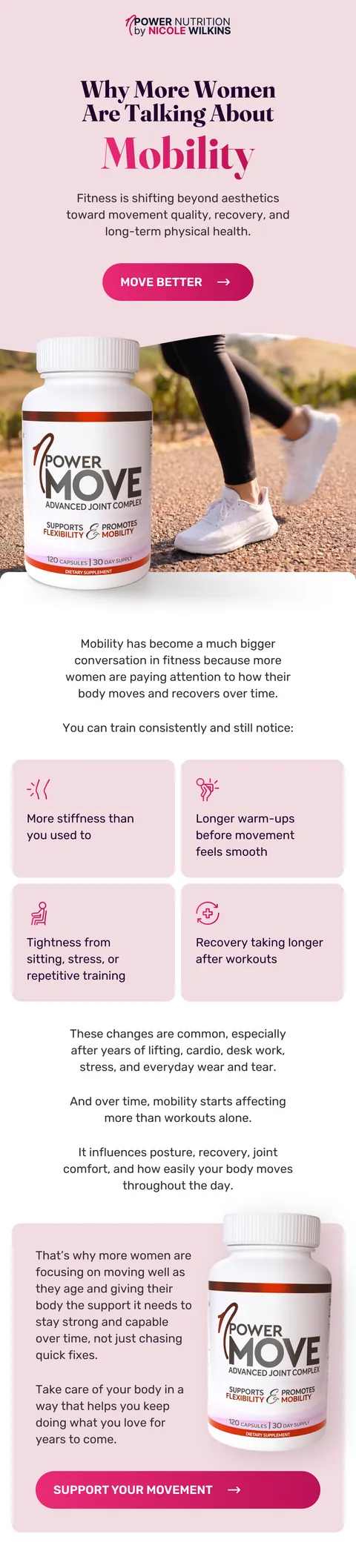
Why fitness email works differently
Fitness buyers are motivated, specific and a little impatient. They know their sport, they care about performance, and they can smell generic lifestyle copy from the subject line.
A few things shape how we build:
- The sport matters more than the demographic. A trail runner and a CrossFit athlete want different products, proof and timing.
- Training cycles drive demand. New Year, race season, the start of outdoor season and the build-up to events create clear peaks.
- Fit and feel are the main objections. For apparel and compression, sizing questions stop more orders than price does.
Segment by sport and goal from the first day
We add one question to your signup form: what do you train for? Running, lifting, cycling, team sports, recovery, everyday movement. That single answer, stored as zero-party data, changes the welcome series, the product picks in campaigns and the stories you tell.
Over time, purchase behavior refines it. Someone who bought calf sleeves and recovery socks is treated as a runner even if they skipped the question. Read more about collecting this at zero-party data.
Two buying cycles in one catalog
Many fitness brands sell gear that lasts and products that get used up, such as tape, wax or nutrition. Customers come back for each on a different clock, so we build for both.
- Apparel and compression follow a fashion curve. The first repeat window opens early, often within the first two weeks when the order arrives and the customer is excited, and most repeat buyers return within about 45 to 60 days. Post-purchase runs dense in that window instead of one email and a 90-day winback.
- Used-up products follow the run-out date. Tape, wax, nutrition and other consumables get reminders timed to pack size, and they are where a subscription can make sense. Apparel and gear stay on newness.
- Newness is the repeat mechanic for activewear. New colorways, seasonal capsules and limited runs, announced with a date and time and a notify-me list first. When we say a run is limited, the limit is real, because athletes notice fake urgency fast.
Sizing, fit and returns
For activewear and compression, the browse and cart flows do most of the work on fit:
- Size guide content and "how it should feel" copy in browse abandonment, before any discount.
- Back in stock alerts per size and color, since a sold-out medium loses a sale that a restock can recover.
- A post-purchase email that confirms the right fit and explains how to wash and care for technical fabric, so returns go down and reviews go up.
Campaigns around the training calendar
We plan campaigns two weeks ahead around the moments your customers already care about: January goals, spring race season, summer outdoor training, back to routine in September and gifting in Q4. Product launches and new colorways get their own small sequence with a launch SMS to engaged buyers.
Discounts stay rare. Performance buyers pay for products they trust, so most sends focus on proof from athletes and customers, comparisons between products, and how to use gear well.
The flows we build first for fitness brands
- Welcome series split
- Browse and cart flows
- Back in stock per
- Post-purchase
- Cross-sell
Welcome series split by sport, explained in welcome email series.
Read more →Browse and cart flows that answer fit questions, see browse abandonment emails.
Read more →Back in stock per size and color, covered in Klaviyo back in stock flow.
Read more →Post-purchase with care and fit guidance, see post-purchase email.
Read more →Cross-sell into the next logical item, for example socks after sleeves or recovery after training gear. See Klaviyo cross-sell flow.
Read more →Replenishment for consumables such as tape, wax or nutrition, see replenishment emails.
Read more →
- Welcome series split
- Browse and cart flows
- Back in stock per
- Post-purchase
- Cross-sell
FAQ
How should fitness brands segment their email list?
Start with the sport or training goal, collected with one question on the signup form and confirmed by what people buy. Add purchase history next: first-time buyers, repeat buyers and VIPs. Sport plus purchase stage covers most of what a fitness brand needs.
When do fitness brands sell the most through email?
January, the start of spring and outdoor season, the run-up to big races or events, and Black Friday through the holidays are the usual peaks. Your own order data shows which ones matter most for your products.
How do you reduce returns on activewear with email?
Answer fit questions before the order with size guides and "how it should feel" content in browse and cart emails, then send fit and care guidance right after delivery. Clear expectations cut wrong-size orders and the returns that come with them.
Should activewear brands use SMS?
Yes, for launches, restocks of popular sizes and time-sensitive events. Keep it to engaged subscribers and a few texts a month so it stays welcome.
Do activewear and sports nutrition need different email flows?
Yes. Activewear behaves like fashion: customers often reorder in the first weeks after delivery and then come back for new colors and drops. Sports nutrition behaves like a consumable, so reorders follow serving size and run-out dates. When a brand sells both, we time the post-purchase and winback flows separately for each.
Related Reading
Retention Strategy
What Is Zero-Party Data, and How Should Ecommerce Brands Use It?Zero-party data is information a customer gives you on purpose, like a product interest, a clothing size, a preferred email frequency, or why they bought.
Read NowEmail Automations
What Is a Klaviyo Back in Stock Flow, and Is It Worth Building?Back in stock flows start with demand the customer already stated. Here is when they are worth building, how to set them up in Klaviyo and how to avoid wasting that demand.
Read NowEmail Campaigns
Product Launch Email Sequence: How We Launch a New Product With Email and SMSA launch is a sequence, not one email. The exact timing we use, from three weeks out to the follow-ups, and when a small launch needs much less.
Read NowSMS & WhatsApp
SMS Marketing Strategy for Ecommerce: When to Send and What to AutomateSMS works best when the customer moment is important enough to justify the interruption. Here is how we decide where text messaging belongs in an ecommerce retention system.
Read Now