
Industries · Furniture
Email marketing for furniture brands
A sofa can take six weeks to decide on and six weeks to deliver. In between there are fabric swatches, tape measures, a partner who is not convinced, and a dozen visits to your product page.
Furniture is the slowest purchase most online shoppers make. We build Klaviyo email and SMS programs for direct-to-consumer furniture brands that stay helpful through the whole decision and the delivery that follows.
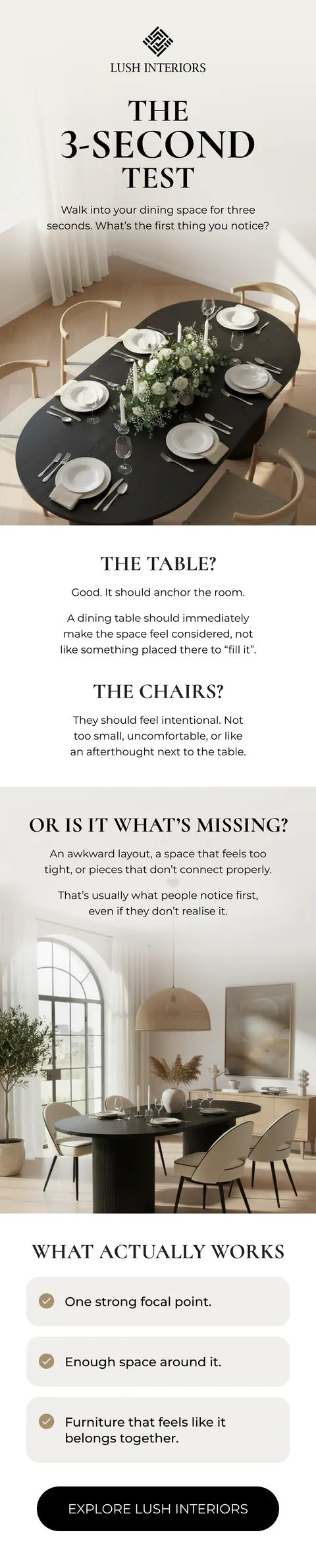

Why furniture email is different
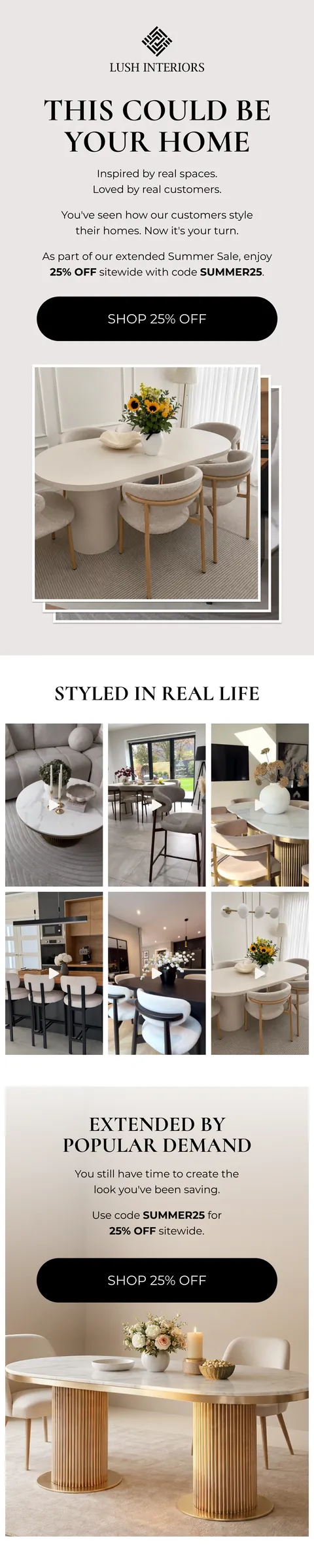
a user generated content email
- Consideration is long. Weeks or months between first visit and order are normal.
- Practical doubts block the sale. Size, fit through the door, fabric feel, comfort and assembly all matter.
- Delivery is part of the product. Long lead times and freight delivery need clear communication.
- Repeat purchases are spread out. The next order might be another room, a matching piece or a move years later.
a user generated content email
Furniture strategy we plan around
- Build a trust-first welcome. Few people buy a sofa in their first week on your list. The welcome series runs longer and spreads guarantees, objections and proof over many emails before it asks for the order.
- Expect flows to carry most of the revenue. With long cycles and high order values, most email revenue comes from welcome, browse and abandonment flows, so they get the most work. Campaigns create demand and keep the brand present.
- Do not force a repeat mechanic that does not fit. Forcing a subscription onto furniture costs months with little to show for it. The second order is usually a matching piece, an accessory, a protection plan or a referral, and the flows are built around those.
- Learn style and room before the first order. Clicks on collections, materials and rooms are saved as preferences, so browse and site abandonment emails show the right pieces to the right people.
Supporting a long decision
Our browse and cart flows for furniture run longer and focus on the questions people actually have: exact dimensions and how to measure, fabric and material close-ups, comfort and firmness explained plainly, real customer rooms, and delivery and returns details. Swatch requests become their own small flow with styling ideas, follow-up after the swatches arrive and a nudge to order before a lead time changes.
Plain-text emails from a real person often perform well here. A simple "any questions about the sofa you were looking at?" with a reply address that a person answers can move a high-value order forward.
Delivery and the first weeks
For furniture, the post-purchase flow starts the moment an order is placed. We send clear updates on production and delivery timelines, what to prepare for delivery day, and assembly and care guides afterwards. Good communication during a long lead time reduces cancellations and support tickets, and a smooth delivery is when customers are most likely to leave a review or refer a friend.
The next room
Once a customer owns one piece, the next purchase is often for the same room or a new one. We use purchase data to suggest matching pieces and accessories, run campaigns around moving season and room refreshes, and build referral moments into the post-delivery flow.
The flows we build first for furniture brands
- Longer welcome series
- Browse and cart flows
- Swatch request follow-up
- Order-to-delivery communication
- Post-delivery care, reviews and
Longer welcome series with buying guides, see welcome email series.
Read more →Browse and cart flows with dimensions and materials, see klaviyo browse abandonment flow.
Read more →Swatch request follow-up, built like a lead nurture flow. See email marketing funnel.
Read more →Order-to-delivery communication, see shipping confirmation email.
Read more →Post-delivery care, reviews and referrals, see review request email.
Read more →Cross-sell for the same room, see klaviyo cross sell flow.
Read more →
- Longer welcome series
- Browse and cart flows
- Swatch request follow-up
- Order-to-delivery communication
- Post-delivery care, reviews and
FAQ
How long should a furniture abandoned cart flow be?
Longer than average. Four to six emails over one to two weeks works for many high-AOV products, each answering a different question such as dimensions, materials, delivery and returns, with an easy way to talk to a person.
How can email reduce furniture order cancellations?
Communicate clearly during the lead time. Production updates, delivery date confirmation and a delivery-day checklist keep customers confident while they wait.
Do furniture brands get repeat customers?
Yes, though less often than consumable brands. Matching pieces, the next room, accessories and moving season bring customers back, and happy customers are a strong source of referrals.
Should furniture brands send fabric swatches through a flow?
Yes. A swatch request is a strong buying signal. Follow up when the swatches arrive with styling ideas and help choosing, then remind them about lead times.
How long should a furniture welcome series be?
Longer than in most categories. Few people buy furniture in their first week, so the welcome series keeps going with proof, guarantees, delivery information and answers to common objections over several weeks. Day-one conversion is low, and that is normal at this price.
Related Reading
Retention Strategy
Premium Pricing Strategy for Ecommerce: How Brands Charge 10x MoreLiquid Death, Cuts and Ritual charge up to 10 times the cheap alternative, and people happily pay. Here are the four levers behind it, and why none of them is a bigger ad budget.
Read NowEmail Automations
Shipping Confirmation Email: What to Include, a Template and ExamplesIt's the email customers open when they wonder where their package is. What to put in it, a template, examples and how to time it with Shopify and Klaviyo.
Read NowEmail Automations
How to Build a Klaviyo Browse Abandonment FlowHow to follow up with product viewers without treating low-intent browsing like high-intent cart abandonment.
Read NowRetention Strategy
Post-Purchase Experience for Ecommerce: How to Make Customers Want to Buy AgainThe customer experience does not end at checkout. The period after the first order is where trust is either reinforced or slowly wasted.
Read Now