
Industries · Fashion & Apparel
Email marketing for fashion and apparel brands
A new drop goes live at 10am. By noon the medium is gone in two colors, half your list has already seen it on Instagram, and the people who missed it will either wait for a restock or forget you exist.
Fashion email is about timing, sizes and taste. We build Klaviyo email and SMS for clothing, apparel and footwear brands that sell at full price more often and bring customers back for the next drop.
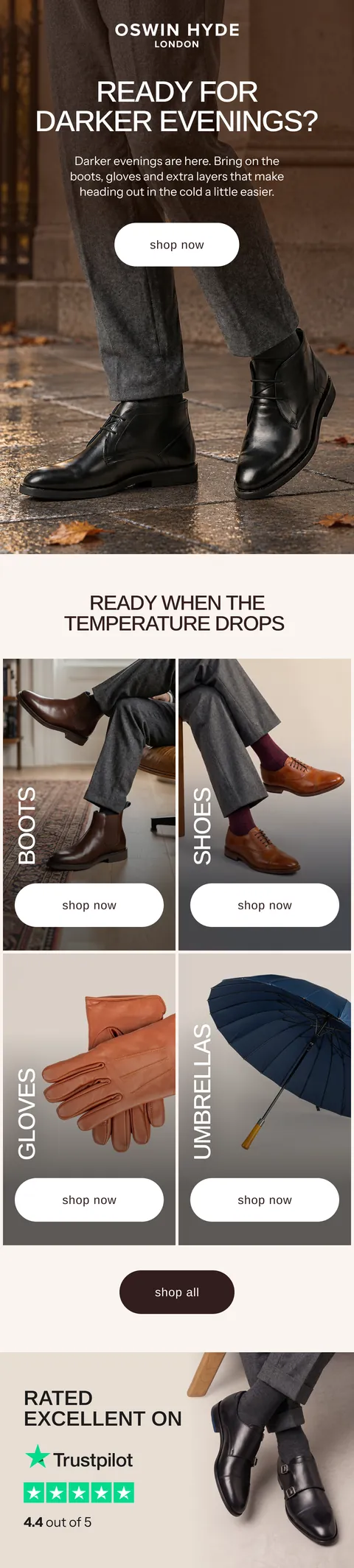

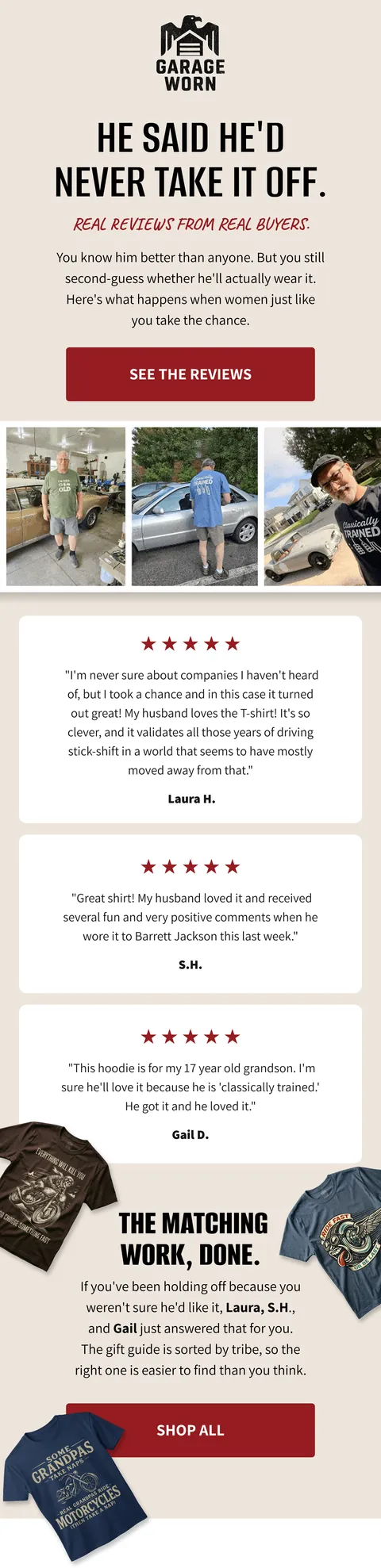
Why fashion and apparel email is different

an interactive apparel email
- Newness drives demand. Collections, drops and colorways give customers a reason to open. Silence between drops costs you.
- Size and fit decide the sale. Many abandoned carts are really size doubts.
- Returns are part of the model. A good post-purchase flow can lower them.
- Discount fatigue is real. Brands that run sales constantly teach customers to wait.
Related case study
Read the GarageWorn case studyan interactive apparel email
Fashion strategy we plan around
- Route collections by customer group. Most apparel lists are several audiences at once: men's and women's, size ranges, use cases. Each group hears about the collections that fit them, with fewer reminders about the rest. Full-list sends are kept for the biggest moments of the year.
- Work the early repeat window. Fashion buyers often come back within the first two weeks, when the order arrives and they love it, and most repeat buyers return within 45 to 60 days. Post-purchase is built for that window, with new arrivals and pieces that go with what they bought.
- Newness is the reason to return. People do not come back to a store that looks the same as six weeks ago. A dated drop calendar with notify-me lists gives past buyers something to come back for.
- Know what good looks like. In apparel, roughly 20 to 33 percent of customers placing a second order is a healthy range. That tells us whether to focus first on the second order or on getting more people onto the list.
Launches and drops that build anticipation
We treat every launch as a small campaign with a beginning, middle and end: a teaser to engaged buyers, early access for VIPs or SMS subscribers, the launch itself, and a follow-up with styling and customer photos once the first reviews come in. Restock alerts then catch the people who missed their size.
Between drops, we keep the list warm with styling content, behind-the-scenes stories, customer photos and bestseller edits, so each launch lands with an audience that is paying attention.
Sizes, fit and fewer returns
We save size preference from purchases and, where useful, from a signup question. That lets us:
- Send back in stock alerts only for the sizes and colors people want.
- Show products available in their size in campaigns.
- Add fit guidance and reviews from similar body types to browse and cart flows.
- Send care and styling tips after delivery, which keeps garments in use and reviews positive.
Protecting full price
Most fashion brands we meet run more sales than they need to. We plan a campaign calendar where promotions are rare and deliberate, and the weeks in between focus on product, story and proof. VIP customers get early access to new drops, which rewards loyalty and protects margin.
Seasons, transitions and end of season
Fashion has more calendar moments than most categories: new season arrivals, transitional pieces, holiday dressing, and the end-of-season clearance that makes room for what comes next. We plan these at least two weeks ahead, give new arrivals the full-price attention first, and keep clearance to a defined window for the customers most likely to buy it, so it never becomes the main reason people open your emails.
The flows we build first for fashion brands

a post-purchase shipping email
Welcome series with style guidance and bestsellers, see welcome email examples.
Read more →Browse, cart and checkout flows with fit help, see Klaviyo abandoned cart flow.
Read more →Back in stock by size and color, see Klaviyo back in stock flow.
Read more →Product launch sequence, see product launch email sequence.
Read more →Post-purchase styling and care, see post purchase email.
Read more →VIP flow with early access, see Klaviyo VIP flow.
Read more →
a post-purchase shipping email
FAQ

a gift guide email
How often should a clothing brand send emails?
Three to four campaigns a week to engaged subscribers is a common starting point for established apparel brands, with more around launches and big sales. Rotate launches, styling, social proof and brand stories so it never feels repetitive.
How do fashion brands use back in stock emails?
Let customers sign up for a specific size and color, then notify them as soon as it returns, often by SMS and email together. It recovers sales that would otherwise go to a competitor.
Should apparel brands discount in abandoned cart emails?
Usually not in the first emails. Answer fit, shipping and returns questions first. Many apparel carts are size doubts, and a discount does not solve those.
How can email reduce returns for clothing brands?
Give clear fit guidance before purchase, use reviews that mention fit, and send care and styling tips after delivery. Customers who know what to expect keep more of what they buy.
What is a good repeat purchase rate for a fashion brand?
For apparel and fashion, a repeat purchase rate of roughly 20 to 33 percent is healthy. A brand at 22 percent is doing fine for the category, while the same number would be weak for a supplement brand. Track it by monthly cohort so you can see whether new customers are coming back faster than before.
a gift guide email
Related Reading
Email Campaigns
Product Launch Email Sequence: How We Launch a New Product With Email and SMSA launch is a sequence, not one email. The exact timing we use, from three weeks out to the follow-ups, and when a small launch needs much less.
Read NowEmail Automations
What Is a Klaviyo Back in Stock Flow, and Is It Worth Building?Back in stock flows start with demand the customer already stated. Here is when they are worth building, how to set them up in Klaviyo and how to avoid wasting that demand.
Read NowEmail Campaigns
Email Marketing Campaign Strategy for Ecommerce: What to Send Beyond DiscountsStrong email campaigns do not rely on one killer promotion. Here is how we build a repeatable ecommerce campaign strategy around trust, products, proof and controlled selling.
Read NowRetention Strategy
Customer Retention Examples: How Oura, Lemme, AG1 and True Classic Win Repeat CustomersA smart ring, gummies, a greens powder and a basic t-shirt. Four brands, four ways to get customers back, and none of them lean on a 50% off code.
Read Now