
Industries · Sleep & Bedding
Email marketing for sleep and bedding brands
Nobody buys a pillow on impulse at 2pm. They buy it at 1am after another bad night, or three weeks after they first looked, once they have read every review twice.
Sleep products have a slow first decision and a surprisingly loyal second one. We build Klaviyo email and SMS for pillow, mattress, bedding and sleepwear brands that respect the slow part and earn the loyal part.

What makes sleep and bedding different
- The product is personal. Side sleepers, back sleepers, hot sleepers and people with neck pain need different things. A generic bestseller email misses most of them.
- Trial periods shape the journey. Many sleep brands offer a 30 to 100 night trial. The weeks after delivery decide whether the product stays or comes back.
- The second order is predictable. People who love their pillow buy a second one for their partner, then matching sheets, then a set for the guest room.
Start with how they sleep
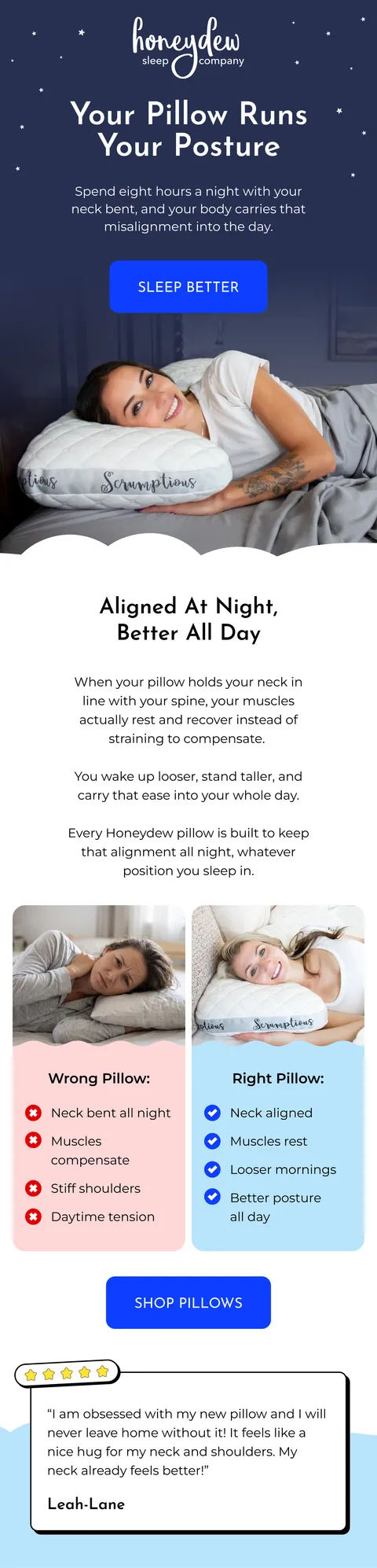
We add a short sleep question to signup: sleep position, whether they run hot, and what they want to fix. The welcome series then talks to that person. A side sleeper hears about loft and support. A hot sleeper hears about breathable fabric and linen. Both get real customer reviews from people like them.
This also gives you clean segments for campaigns, so a new cooling product only goes to the people who said heat keeps them up.
The economics of a product that lasts for years
A good pillow or duvet is not bought every month, so sleep brands need a different retention model from consumables.
- Expect durable-goods repeat rates, then beat them with the set. Home and durable categories usually see somewhere between 6 and 18 percent of customers buy again. The brands above that range treat the first item as the start of a set: the second pillow, matching cases, a summer-weight duvet.
- Do not copy a consumable playbook. A mattress or premium bed earns once or twice over many years, and the second purchase is often an accessory, a protection plan or a referral. LTV targets and acquisition budgets have to reflect that, so we model them on your category.
- Make delivery part of the product. Order and shipping emails build anticipation for the first night. A product that arrives feeling like an event gets talked about and reviewed.
- Ask for the referral when the trial ends well. The end of a happy trial is the moment a customer is most likely to recommend you, so the review request and referral ask live there.
Getting through the trial
For brands with a trial period, the post-purchase flow is the most important flow you have:
- Night one: how to set it up, and a reminder that most people need a few nights to adjust.
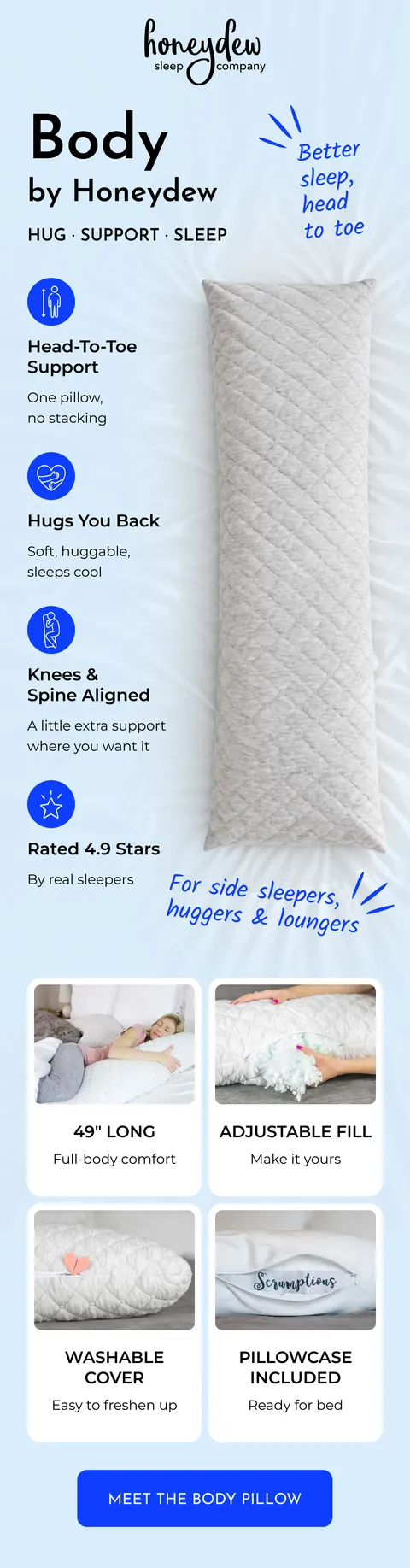
- Week two: a check-in with tips for the most common complaints, such as fluffing or adjusting fill.
- Near the end of the trial: a review request, plus a clear path to support for anyone who is unsure, before they start a return.
Care content matters too. Linen softens with washing, down needs airing, and memory foam has its own rules. Good care emails cut returns and keep the product looking good enough to recommend.
Completing the set
The best second purchases in this category feel obvious: the second pillow, the matching pillowcases, the duvet cover in the same color, a lighter set for summer. We build cross-sell flows around what was bought and when, and seasonal campaigns that time heavier and lighter bedding to the weather.
Gifting is real here as well. Sleepwear and bedding do well in Q4 and around Mother's Day, so those campaigns get planned early.
The flows we build first for sleep brands
- Welcome series
- Browse abandonment
- Trial-period post-purchase
- Review request
- Cross-sell
Welcome series by sleep need, see welcome email series.
Read more →Browse abandonment with comparisons and reviews, because people compare a lot before buying. See browse abandonment emails.
Read more →Trial-period post-purchase, see post-purchase email sequence.
Read more →Review request timed after adjustment, see review request email.
Read more →Cross-sell to complete the set, see Klaviyo cross-sell flow.
Read more →Winback timed to replacement cycles, see Klaviyo winback flow.
Read more →
- Welcome series
- Browse abandonment
- Trial-period post-purchase
- Review request
- Cross-sell
FAQ
How long is the buying cycle for sleep products?
Longer than most categories. Many people visit several times and read reviews before buying a pillow or mattress, so browse abandonment, comparisons and social proof do a lot of work. Expect days to weeks for the first order.
How do you reduce returns during a sleep trial?
Set expectations on night one, send practical tips in week two for the usual complaints, and give unsure customers an easy path to support before the trial ends. Most returns we see come from customers who never got help adjusting.
When should a bedding brand ask for a review?
After the customer has slept on it long enough to judge it, usually two to four weeks after delivery. Asking on day two gets fewer and weaker reviews.
What should sleep brands email about besides sales?
Sleep tips by sleep position, care guides for the materials you use, seasonal bedding swaps, customer stories and how your products are made. That content keeps people engaged between the few big buying moments.
What is a realistic repeat purchase rate for a bedding brand?
Durable home products usually land somewhere between 6 and 18 percent of customers placing a second order. Bedding brands can do better by building sets and seasonal products around the first purchase, such as a second pillow, matching sheets or a lighter duvet for summer.
Related Reading
Retention Strategy
Post-Purchase Experience for Ecommerce: How to Make Customers Want to Buy AgainThe customer experience does not end at checkout. The period after the first order is where trust is either reinforced or slowly wasted.
Read NowEmail Automations
Review Request Emails: When to Send Them and How to Get More ReviewsDay 7 is not a review strategy. How we time review request emails by product, why the reminder matters, and how to offer a gift without breaking the rules.
Read NowRetention Strategy
What Is Zero-Party Data, and How Should Ecommerce Brands Use It?Zero-party data is information a customer gives you on purpose, like a product interest, a clothing size, a preferred email frequency, or why they bought.
Read NowRetention Strategy
Unboxing Experience for Ecommerce: How to Make Your Price Feel Worth It"That's it?" is the worst thing a new customer can think when they open your package. Here's how to design an unboxing experience that makes your price feel fair and the second order more likely.
Read Now