Industries · Home Goods & Decor
Email marketing for home goods and decor brands
Someone buys a linen tablecloth in March. In May they want napkins that match. In October they are setting the table for twelve and need a runner, and in December they are buying the same tablecloth as a gift.
Home goods customers come back when you show them the next room, the next season or the next occasion. We build Klaviyo email and SMS for home goods, decor, textile and kitchenware brands that make those moments feel natural.

Why home goods need a different approach

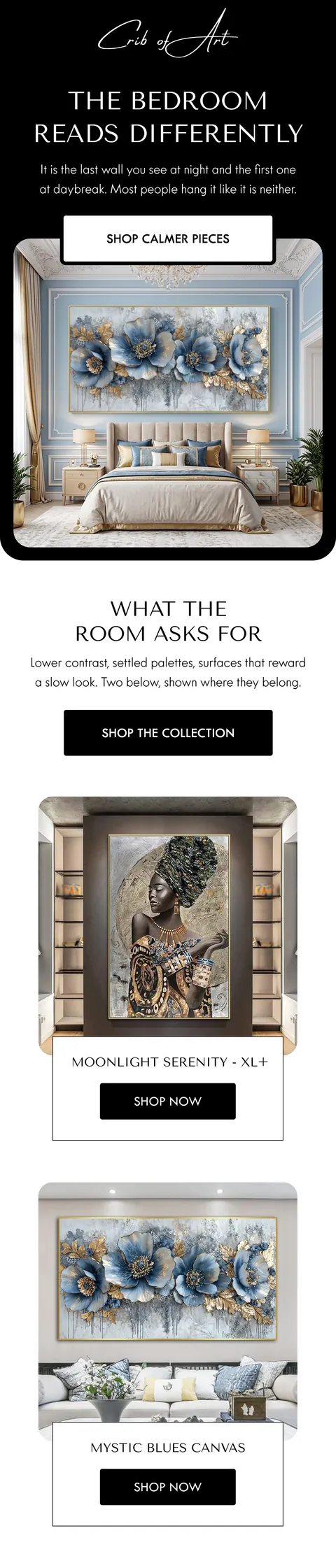
a reviews led sale email
- People buy for a space. The kitchen, the bedroom, the dining table and the bathroom all have their own products and their own triggers.
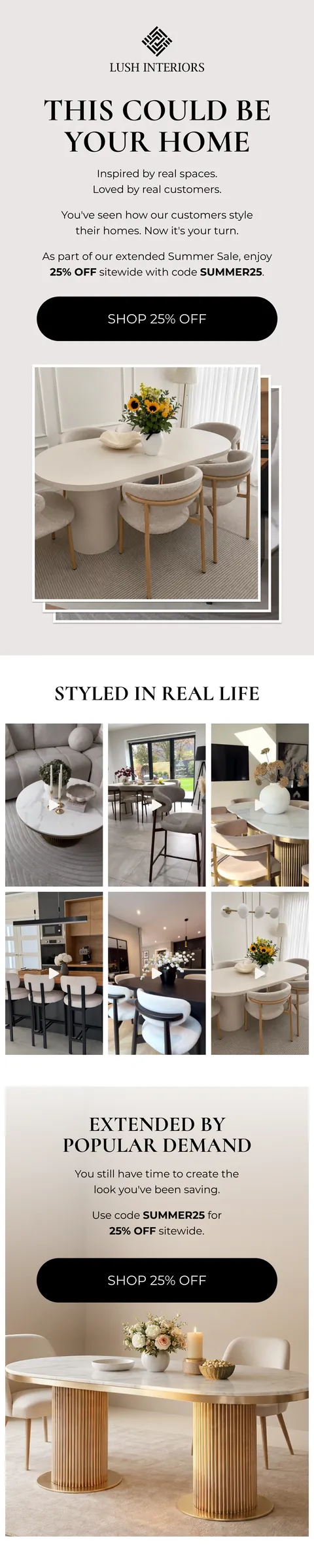
- The product has to be seen in a real home. Styled photography and customer photos sell home products far better than packshots.
- Seasons and hosting drive demand. Spring refresh, summer outdoor living, autumn hosting and holiday gifting create clear peaks every year.
- Repeat buying is about completing and refreshing, rarely about replenishing.
a reviews led sale email
Segmenting by room and style
We track which room each customer buys for and which style or color they choose. Someone who bought a bedding set in sage green should see the matching pieces before anything else. A customer who only buys kitchen textiles gets kitchen campaigns.
A simple signup question such as "which room are you updating?" speeds this up for new subscribers before they have bought anything.
Home goods strategy we plan around
- Measure against home-goods benchmarks. Durable home categories usually see 6 to 18 percent of customers buy again. Repeat comes from completing a space and from newness, such as new colors and seasonal collections, so the calendar plans for both.
- Put the winback on a long clock. Premium home goods can take close to six months before a second order. A 90-day winback arrives while customers are still happy with their first purchase and pushes a discount they did not need.
- Give every campaign a job. In a long buying cycle, some emails create demand with inspiration, some convert people who are ready, and some exist to win the second order. A random mix of all three wastes sends.
- Let inventory drive some of the flows. Back in stock, low stock and price-drop flows move inventory that abandonment flows never touch, and moving stock faster brings cash back sooner for the next order or ad spend.
Campaigns that look like a home
Home goods campaigns work best when they look like an interior magazine and read like a friend's advice. We plan a mix of:
- Styled room stories showing several products together.
- Customer photo features, which double as social proof.
- How-to content: how to style a table, layer a bed, care for natural materials.
- New colors and collections, launched to engaged buyers first.
- A few promotions a year, planned around your strongest seasons.
Design is a big part of the work here. Our team designs every email to look like your brand, with real photography and a clear primary call to action.
Browse behavior and the long look
Home products often get viewed several times before the first purchase, sometimes over weeks. Our browse flow for home brands gives people time, then answers the questions that stall a home purchase: exact dimensions, material and texture up close, how the piece looks in a real room and how to care for it.
Gifting and hosting
Home products make easy gifts: textiles, tableware, candles and small decor all sell well in Q4, around Mother's Day and for weddings and housewarmings. We build gift guides by budget and recipient, add gift messaging and shipping cut-off reminders, and follow up after the holidays with the people who received your products as a gift and might want more for their own home.
The flows we build first for home goods brands
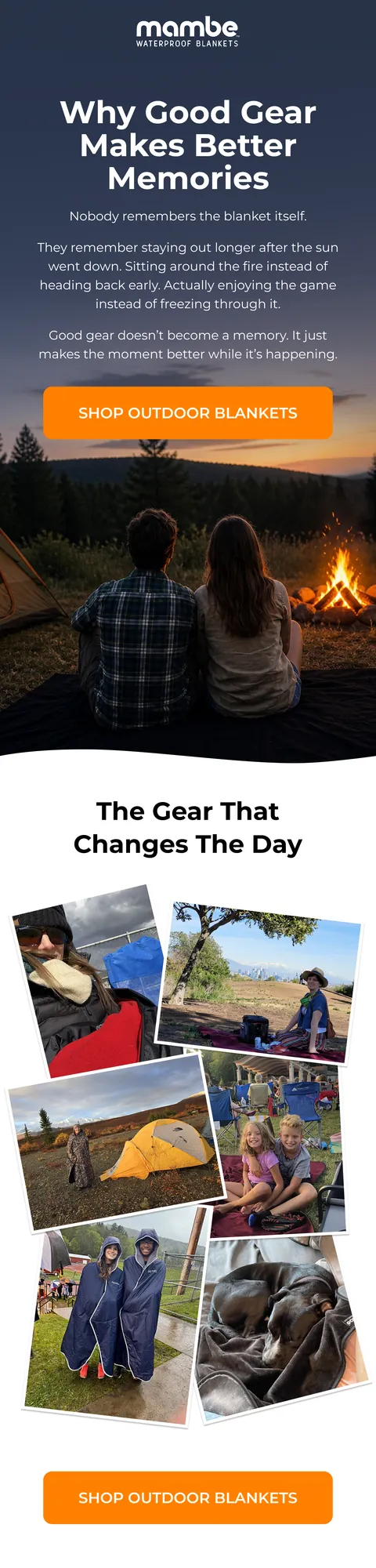
an outdoor blanket storytelling email
Welcome series with style and room guidance, see welcome email series.
Read more →Browse abandonment with dimensions and room shots, see Klaviyo browse abandonment flow.
Read more →Post-purchase care and styling, see post-purchase email.
Read more →Cross-sell to complete the room or set, see Klaviyo cross-sell flow.
Read more →Back in stock for popular colors, see Klaviyo back in stock flow.
Read more →Gifting and holiday sequences, see holiday gift guide email.
Read more →
an outdoor blanket storytelling email
FAQ
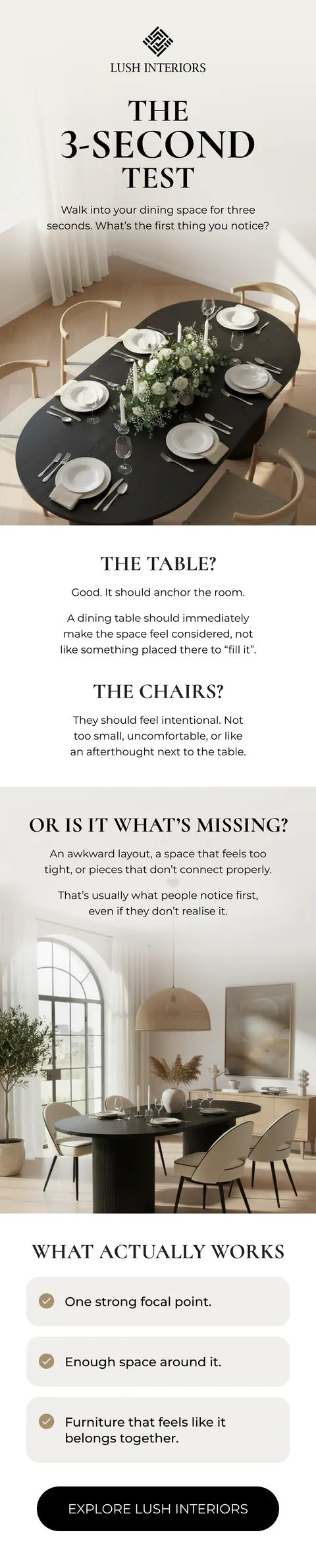
a dining room product email
What emails work best for home decor brands?
Styled room stories, customer photo features, new color launches and practical how-to content usually outperform pure discount emails. Combine them with strong browse abandonment and cross-sell flows that suggest the next piece for the same room.
How do home goods brands get customers to buy again?
Show them what completes what they already own: matching pieces, the same item in a new color, products for the next room, and seasonal refreshes. Use purchase data so each customer sees the pieces that fit their style.
When should home goods brands run promotions?
A few times a year around your strongest moments, often spring, Black Friday and the holidays. Between those, full-price campaigns built on inspiration and proof protect your margin.
Do home decor brands need SMS?
It helps for restocks of popular items, launches and the big sale moments. Most of the selling still happens in email, where you can show the product properly.
When should a home goods brand send a winback email?
Base it on your own time between orders. For premium home goods the gap is often close to six months, so a standard 90-day winback fires too early. Pull the average time between first and second order from Shopify or Klaviyo and start the winback after that window has passed.
a dining room product email
Related Reading
Email Campaigns
Email Design Best Practices for Ecommerce: Layout, CTAs & MobileGood ecommerce email design is not about making the prettiest email in the inbox. It is about making the message easier to understand and the next action easier to take.
Read NowEmail Automations
How to Build a Cross-Sell Flow That Drives the Second PurchaseCross-sell isn't a catalog dump after checkout. It's one well-timed nudge toward the product that naturally comes next, so first-time buyers turn into second-time customers.
Read NowEmail Campaigns
How Do You Write a Holiday Gift Guide Email That Sells Without a Discount?In December, shoppers aren't asking for a bigger discount. They're asking what to buy. A good gift guide email answers that, and it protects your margin.
Read NowEmail Campaigns
Email Marketing Calendar for Ecommerce: How to Plan Your CampaignsA good email calendar prevents your strategy from becoming a last-minute cycle of product pushes and discounts. Here is how we plan campaigns around variety, trust and consistent selling.
Read Now