
Industries · Food, Beverage & CPG
Email marketing for food, beverage and CPG brands
The first order is usually a variety pack or a bestseller someone saw on social. The question that decides your business is simple: which flavor did they love, and will they come back for it before they find it somewhere else?
Food and drink brands win on taste, habit and convenience. We build Klaviyo email and SMS for direct-to-consumer food, beverage and CPG brands that learn what each customer likes and make reordering effortless.

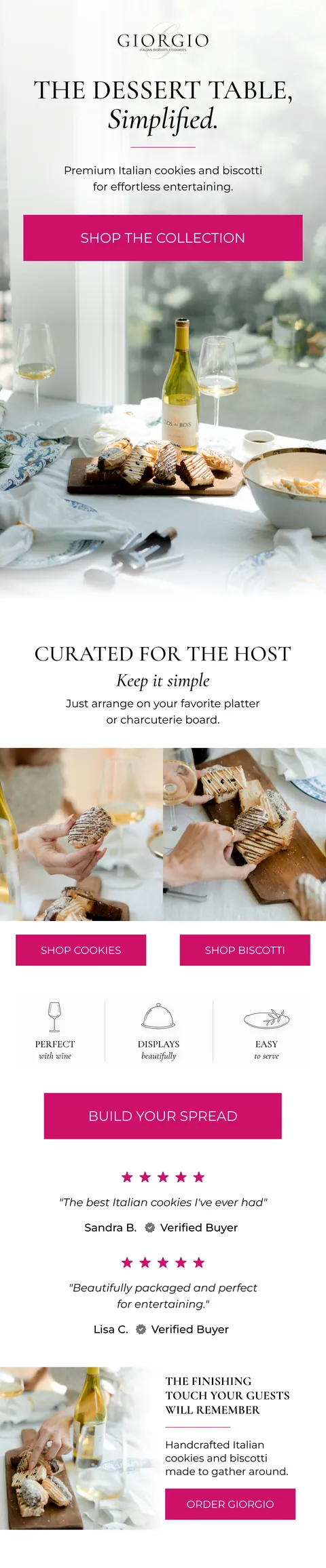
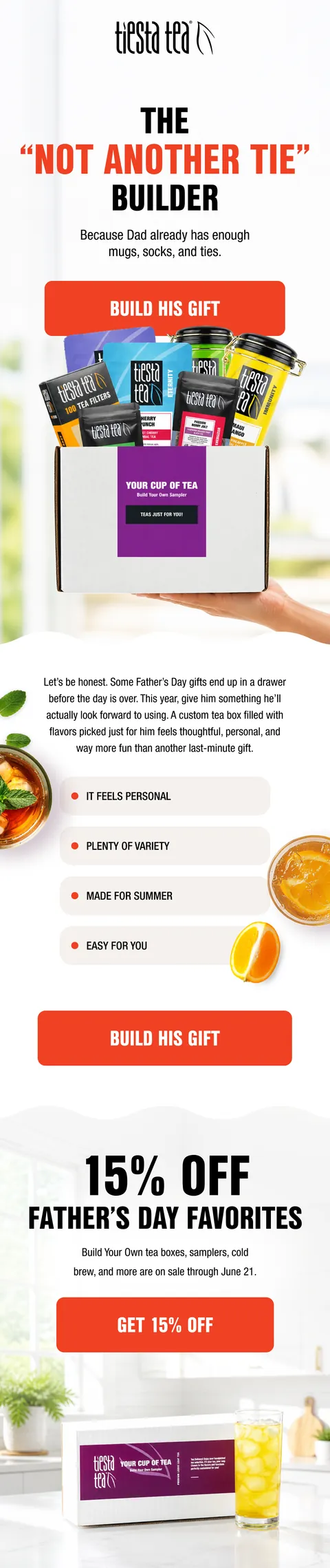
What makes food and beverage email different

an interactive flavor quiz email
- Taste is personal and hard to predict. Two customers who bought the same sampler may have opposite favorites.
- Products get used up. Coffee, tea, snacks and drinks have a natural reorder rhythm, often faster than other categories.
- Retail is always one aisle away. If your brand is also in stores or on Amazon, direct customers need a reason to keep ordering from you.
- Shipping has rules. Heat, freshness and delivery days can limit when and where you can ship, and email has to set those expectations.
an interactive flavor quiz email
Learning what people actually like
We ask early and listen to what they buy. A signup question about taste or use (strong or mellow, caffeine or none, sweet or savory) shapes the welcome series. After the first order, a short "which one was your favorite?" email turns a sampler into a clear preference and gives you a segment for every future launch.
That data makes campaigns better too. A new flavor goes first to the people most likely to love it, and the rest of the list hears about it once there are reviews.
Food and drink strategy beyond the reorder reminder
- Fight boredom as hard as churn. Food and drink customers rarely leave because the product failed. They get bored. Limited flavors, seasonal editions and collaborations give the same customer a reason to reorder, and subscribers can swap into them instead of canceling.
- Show the price per serving. A pack price looks big next to a supermarket shelf. Cost per cup, can or serving is easier to compare with what people buy today.
- Let the welcome offer grow with the cart. Tiered offers, with the first tier close to your current average order value, turn more first orders into variety packs and bundles.
- Tie seasonal campaigns to a real need. A holiday or season works best when it creates a moment the product answers, such as hosting, cold mornings or summer heat. A themed banner on a regular promotion does far less.
- Hold yourself to consumable benchmarks. Roughly 30 to 45 percent of customers should come back for a second order. If you are below that, the reorder and subscription setup is the first place we look.
Reorders and subscriptions
For consumables we time reorder emails to how long a pack lasts and to each customer's own gap between orders. Brands with subscriptions get onboarding that shows how to skip, swap flavors and change frequency, because flexible subscribers stay longer than those who feel locked in.
When someone tries to cancel, we offer the options that solve the real reason first: too much product, wrong flavor, or price. More on that at subscription marketing.
Campaigns, recipes and the calendar
Food and drink have a natural content engine. Recipes, serving ideas, pairings, origin stories and seasonal flavors give you plenty to send without discounting every week. We plan around seasons and moments such as summer drinks, cozy autumn flavors, holiday gifting and New Year resets, and we keep promotions to a few clear moments.
SMS and compliance for food and beverage
SMS works well for restocks, limited flavors and subscription updates. Two rules matter in this category. Brands that sell alcohol need a 21+ age gate before texting in the US, and carriers also review the page a text links to. And any health or nutrition claim in an email or text needs the same care it gets on your packaging.
The flows we build first for food and beverage brands
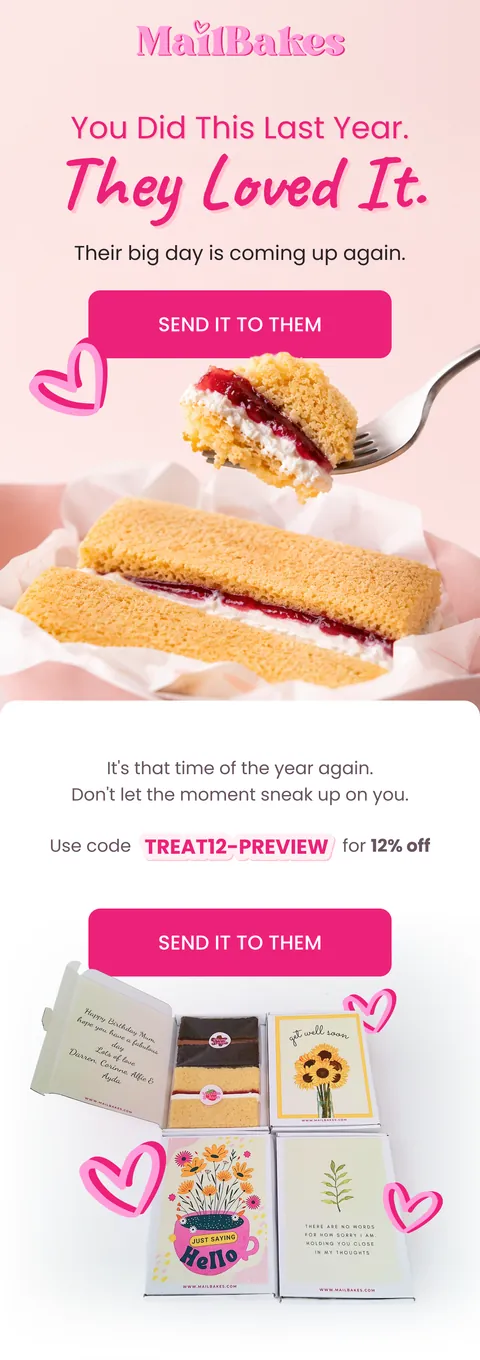
a repeat gifting reminder email
Welcome series with taste guidance, see welcome email series.
Read more →Post-purchase with serving ideas and a favorite-flavor question, see post purchase email sequence.
Read more →Replenishment timed to pack size, see replenishment emails.
Read more →Subscription onboarding and save offers, see subscription cancellation emails.
Read more →Back in stock for limited flavors, see Klaviyo back in stock flow.
Read more →Winback for lapsed reorderers, see winback email examples.
Read more →
a repeat gifting reminder email
FAQ
How often should food and beverage brands send emails?
Most established brands we work with send three to four campaigns a week to engaged subscribers, plus flows. Recipes, launches, flavor stories and customer favorites keep that frequency useful without constant discounts.
How do you get food customers to reorder?
Time the reminder to how long the product lasts, make reordering one click, and suggest the flavor they liked most. Subscriptions with easy skip and swap options keep reorders going without extra effort from the customer.
Can beverage brands that sell alcohol use SMS?
In the US, alcohol brands can text only with a 21+ age gate in place, and carriers check both the message and the linked page. Klaviyo supports age-gating for alcohol in some countries and on eligible sending numbers. Email has fewer restrictions.
What is the best first email flow for a CPG brand?
A strong welcome series, followed closely by post-purchase and replenishment. For consumable products, the second order matters more than almost anything else, and those three flows drive it.
How do food and beverage brands keep subscribers from getting bored?
Give them variety inside the subscription. Limited flavors, seasonal editions and easy swaps let a subscriber try something new without canceling. Announce new flavors to subscribers first, and make swapping as simple as possible, by email or by replying to a text.
Related Reading
Retention Strategy
Consumable Products: Why Boring Products Build the Most Profitable Ecommerce BrandsSoap, cereal, hand sanitizer. Nobody gets excited about them, and that's the point. Why products that run out build stronger ecommerce brands, and how to time the reorder.
Read NowEmail Automations
Replenishment Emails: How to Time Them Around Real Customer BehaviorThe best replenishment email does not feel like a promotion. It arrives when the customer is actually running low. Here's how we build the timing around real purchase behavior.
Read NowRetention Strategy
Subscription Churn: Why Ecommerce Customers Cancel and How to Reduce ItMost churn reduction happens before a customer tries to cancel. Fix the offer, first renewals, product usage, billing reminder and flexibility before relying on winback.
Read NowRetention Strategy
Ecommerce Subscription Marketing: How Email & SMS Should Actually WorkSubscription brands should not run email like normal ecommerce stores. The goal shifts from driving another checkout to keeping customers using, valuing and renewing the product.
Read Now